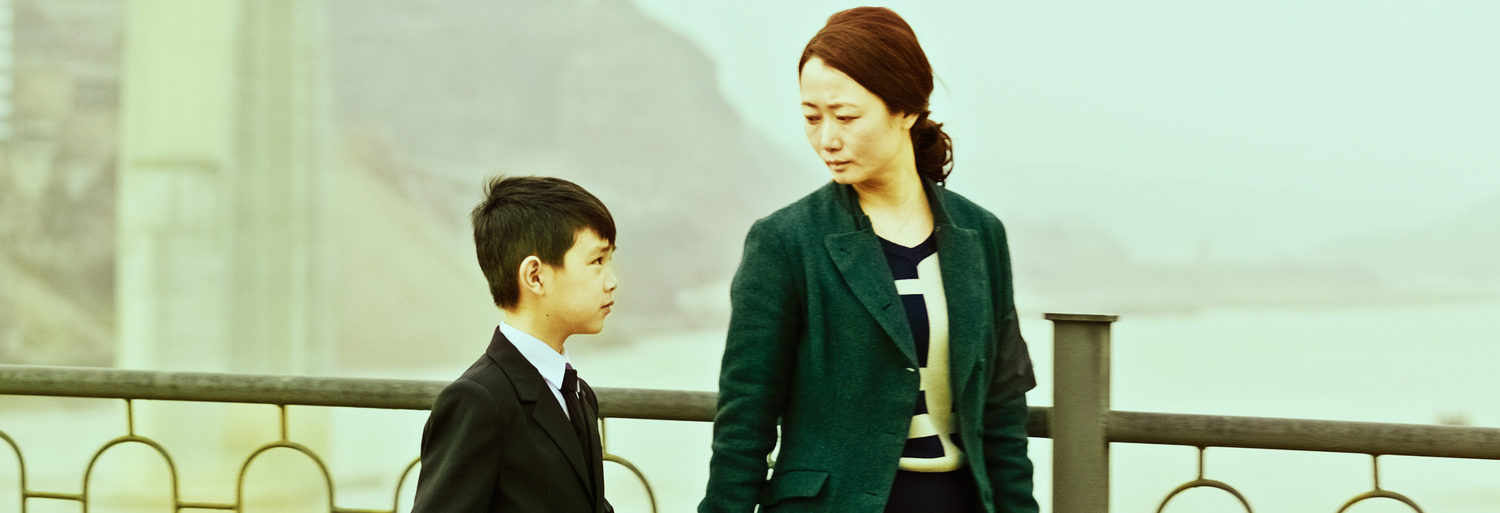
Mountains May Depart's reviews




Media reviews
El Mundo
'Mountains May Depart' is undoubtedly the work of a master (...) Without excuses or cryptic symbolic allegories (...) A film illuminated by emotion and wisdom.
Clarin
Political, economic and cultural readings outcropping (...) sparkling dialogues in youth, concerned in adulthood and more bitter in the end of the film futuristic, help draw a compass is also defined by the format and color images.
Fotogramas
Fresh, wild, uninhibited and crazy. His best film from the insuperable 'The World'.
New York Times
Mr. Jia?s approach means that you have to do a certain amount of interpretive work, though mostly you just have to pay attention and be a little patient. If you do, you will notice that Mountains May Depart is a movie of threes: its main characters, moments in time, narrative sections, historical symbols and even aspect ratio come in triplicate.
Roger Ebert
Whatever Jia shows us and wherever he takes us, we?re always aware of being in the hands of one of the contemporary world?s great filmmakers.
ABC
It seems that if the many admirers of Jia Zhang-Ke had other perspectives on the film, is that they are well below those of the director.
The A.V. Club
Sentimental, and plotted with the elegance of a silent film.
Hitfix
Jia probably made a mistake directing the 1999 sequence in such an over-the-top and stilted tone (it also feels more like 1989 than the turn of the century), but the rest of the film is incredibly well done.
The Telegraph
Its generation-spanning story has serious power, and, in its masterful opening chapter and final sequence, brushes against greatness.
Variety
If ?Mountains? feels a touch schematic at times, and awkward in its third-act English-language scenes, the cumulative impact is still enormously touching, highlighted by Jia?s rapturous image-making and a luminous central performance by the director?s regular muse (and wife), Zhao Tao.