
Info
- Full Name: Eusebio Poncela Aprea
- Date of birth: September 15, 1947
- Location: Madrid
- Country: Spain
- Height: 1,80m
- Died at: 77 years old (August 27, 2025)
Eusebio Poncela died a year ago, on August 27, 2025. Their last recorded film was in 2025, and their first in 1967. They were active for 58 years, appearing in 17 films that averaged a rating of 5.7/10.



Biography
Eusebio Poncela was born in Madrid on 15 September 1945 and grew up in Vallecas, a working-class district of the city. As a boy he ran away from home more than once and was thrown out of eight schools, but he knew from a very early age that he wanted to act. That stubborn streak stayed with him through a career of almost sixty years on stage, in film and on television.
He trained at Madrid's Royal School of Dramatic Art and made his stage debut in 1967 in Lorca's 'Mariana Pineda'. 'Romeo and Juliet' and 'Marat/Sade', with Adolfo Marsillach's company, followed soon after. He also appeared in 'Estudio 1', Spanish public television's theatre strand, alongside actors of his own generation such as Juan Diego and Marisa Paredes.
A cult classic and a TV hit
His first films included 'Pastel de sangre' (1971) and Eloy de la Iglesia's 'The Cannibal Man' (1972), where he played a gay character in a film that Franco's censors cut. His breakthrough came in 1979 with 'Rapture' ('Arrebato'), directed by Iván Zulueta.
Poncela played José Sirgado, a low-budget horror director hooked on both cinema and heroin. The film flopped on release, but over the years it's become one of the great cult films of Spanish cinema. That same year he appeared in Gillo Pontecorvo's 'Ogro', as one of the ETA commandos who assassinated Spanish prime minister Luis Carrero Blanco.
Television, though, is what made him famous at home. In 1982 he played Carlos Deza in 'Los gozos y las sombras', the adaptation of Gonzalo Torrente Ballester's novel, opposite Charo López and Amparo Rivelles. Four years later he took on Manuel Vázquez Montalbán's private eye in 'Las aventuras de Pepe Carvalho'.
Working with Almodóvar
The late 1980s were his busiest years on the big screen. In 1986 he played the police inspector in 'Matador', his first film with Pedro Almodóvar, and starred in 'Werther', Pilar Miró's modern take on Goethe's novel.
A year later came 'Law of Desire'. He was Pablo Quintero, a gay filmmaker who becomes the obsession of a young man played by Antonio Banderas, with Carmen Maura as his transgender sister. In 1987 Spain, an openly gay leading man in a film of that profile was very unusual. He went on to work with Carlos Saura on 'El Dorado' (1988) and with Imanol Uribe on 'The Dumbfounded King' (1991).
Starting over in Argentina
Poncela was always open about his long heroin addiction. In the 1990s, tired of Madrid, he left for Argentina. He lived in Ushuaia, travelled around Patagonia and spent time at the home of his friend Cecilia Roth, his co-star in 'Rapture'. He painted there too, and even exhibited his work. Years later he was proud of having kicked the habit on his own, saying he never even went to a clinic.
Argentine cinema gave him a second wind. After 'A Shadow You Soon Will Be' (1994), Adolfo Aristarain cast him as Dante in 'Martín (Hache)' (1997), the hedonistic best friend of the film director played by Federico Luppi. Many critics see it as his finest performance, and it won him the Silver Condor for Best Supporting Actor, one of Argentina's top film awards. Cecilia Roth and Juan Diego Botto were also in the cast.
'Intacto' and a run of cardinals
Back in Spain, Juan Carlos Fresnadillo cast him in 'Intacto' (2001). He played Federico, a man who can steal other people's luck, in a cast that included Max von Sydow and Leonardo Sbaraglia. The role brought him his only Goya nomination, for Best Actor.
The 2000s took him through very different genres: Álex de la Iglesia's '800 Bullets' (2002), 'Sisters' (2005), 'Remake' (2006) and 'The Borgia' (2006), where he played Cardinal Giuliano della Rovere. He made 'Theresa: The Body of Christ' (2007) with Ray Loriga and Paz Vega, and later joined the gothic horror of 'The Valdemar Legacy' (2010) and its sequel 'The Forbidden Shadow' (2011).
On television, Cardinal Cisneros became one of his best-known parts. He first played him in 'Isabel' and returned to the role in 'Carlos, rey emperador', which earned him the Iris Award for Best Actor from the Spanish Television Academy in 2016, and in the film 'La corona partida'. He also turned up in 'The Department of Time', 'The Red Eagle' and 'El accidente', and in 2021 joined the second season of 'Merlí: Sapere Aude' as Dino, the owner of the Satanassa bar, who becomes a key influence on the young Pol Rubio, played by Carlos Cuevas.
His own way
He never hid his sexuality. He called himself "gay, and proud of it", and only half joking, he'd say he wasn't bisexual but "trisexual". He lived alone by choice, and for more than two decades he'd kept his distance from central Madrid in El Escorial. He kept working on stage until late in life, and his last play was 'Kiss of the Spider Woman' in 2022.
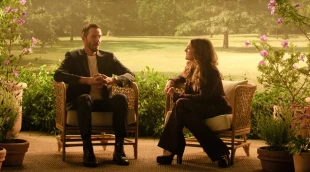
Poncela died at his home in El Escorial on 27 August 2025, aged 79, after a year with cancer that he kept private. A few months earlier SkyShowtime had released 'Matices', in which he played the psychiatrist Tomás Marlow, and he'd already finished shooting 'The Tribute' ('El homenaje'), which the same platform released on 23 April 2026. He plays Adolfo Novak, the head of a powerful family who gathers everyone for his 80th birthday, alongside Elsa Pataky.
That September, the San Sebastián Film Festival premiered 'El último arrebato', a documentary by Marta Medina and Enrique López Lavigne. Poncela, Cecilia Roth and Marta Fernández Muro all appear in it, looking back on Zulueta and the film that changed Poncela's career almost half a century earlier.
Last appearances: movies and tv shows


- Highest-rated movie: El Dorado (1967) 8.7
- Lowest-rated movie: The Forbidden Shadow (2011) 3.3
- Highest-rated tv show: The Department of Time (2015) 8.1
- Lowest-rated tv show: The Red Eagle (2009) 6.6