
Trivia
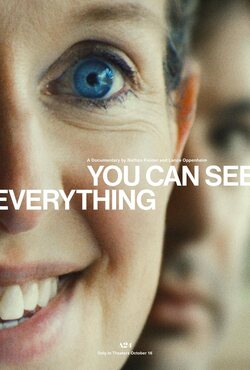
You Can See Everything
Directed by Nathan Fielder and Lance Oppenheim · starring Amanda Seyfried, Christopher Abbott and Nathan Fielder
- 18 facts
- 2026
You Can See Everything: trivia
All 18 facts
- 1
It all started at a magic club
The idea for 'You Can See Everything' came up in 2023 at the Magic Castle in Los Angeles, a private magicians' club where Nathan Fielder is a member. In the close-up magic room the magician asked the audience for a celebrity's name and someone shouted "Elizabeth Holmes". Afterwards Lance Oppenheim told Fielder about a rumour he had just heard: Holmes had approached A24 about having her life documented. "We took that as a sign," Oppenheim recalled.
The coincidence is a neat one, because Fielder worked as a semi-professional magician as a teenager in Vancouver. "I was doing magic, and I worked at a magic shop from when I was 13 until I was 20," he told W Magazine. "I had to stop, because if you don't stop, people will forever say to you, 'Show me a trick.'" - 2
An email about the missing 40 percent
Lance Oppenheim and Nathan Fielder met through an email. In 2020 Oppenheim's screener platform told him that Fielder had watched 60 percent of 'Some Kind of Heaven', his documentary about a Florida retirement community. Oppenheim, a 'Nathan for You' fan, wrote to tell him there was another 40 percent to go. Fielder replied the same day. "I forget why I took a break 60 percent through, but I'm sure it was important," he joked later.
They became friends and looked for something to make together. Before Holmes came along they even tried a Toastmasters public speaking club in New York, but the idea went nowhere. - 3
Holmes knocked on A24's door first
The documentary was Elizabeth Holmes's own idea. She and her partner Billy Evans had approached A24 about having their life filmed, but no filmmaker was attached and the talks went nowhere. When Nathan Fielder heard about it, he called the studio and asked to meet her. At first he saw no film in it: "I thought the story was really fully told," he said at Telluride.
The first meeting threw him. "When I met her, I remember having this weird experience where she seems so genuine at times. But then I'm like, 'no,' and clocking and tracking my thoughts and being like, 'Okay, I know she's a liar,'" he said at the New York Film Festival. - 4
A clause to throw it all away
Nathan Fielder only agreed on two conditions: immediate money to start shooting and the right to kill the project at any point without delivering anything. "We got to decide that if we don't like what we've done, they're not getting their money back and that's it," Lance Oppenheim explained. A24 said yes, and about a week and a half later the crew was setting up cameras in the house in Del Mar.
For Fielder that safety net was crucial. "If we had to pull the plug because it didn't work out, it would sort of be a relief to me," he told WIRED. At Telluride he recalled being told that if nothing came of it, "you can just throw everything away." - 5
Nobody could agree
What convinced the directors they had a film was the nightly debrief with the crew. Nobody agreed on what had happened that day. "We're all smart and we're really working at the top of our intelligence. Why can't we make sense of what's happening in this house?" Nathan Fielder recalled thinking.
Lance Oppenheim compared it to the Zone in Andrei Tarkovsky's 1979 film 'Stalker'. "The laws of reality and everything that we thought was going on outside just evaporated," he said. "I feel like our brains were scrambled." - 6
Fielder was never meant to be on screen
The original plan was for Nathan Fielder to stay behind the camera, and at first he was only going to produce. But Holmes and Evans kept asking him "Nathan, what do you think?", and the conversations ran so long that the operators started panning over to him. And when the couple seemed to be spinning their story, somebody had to push back.
Fielder still doesn't understand why they picked him for Holmes's last month of freedom. "I'm a nice person, I do believe, but I'm not the most comforting," he told a laughing New York audience. - 7
Three cameras, sixteen hours a day
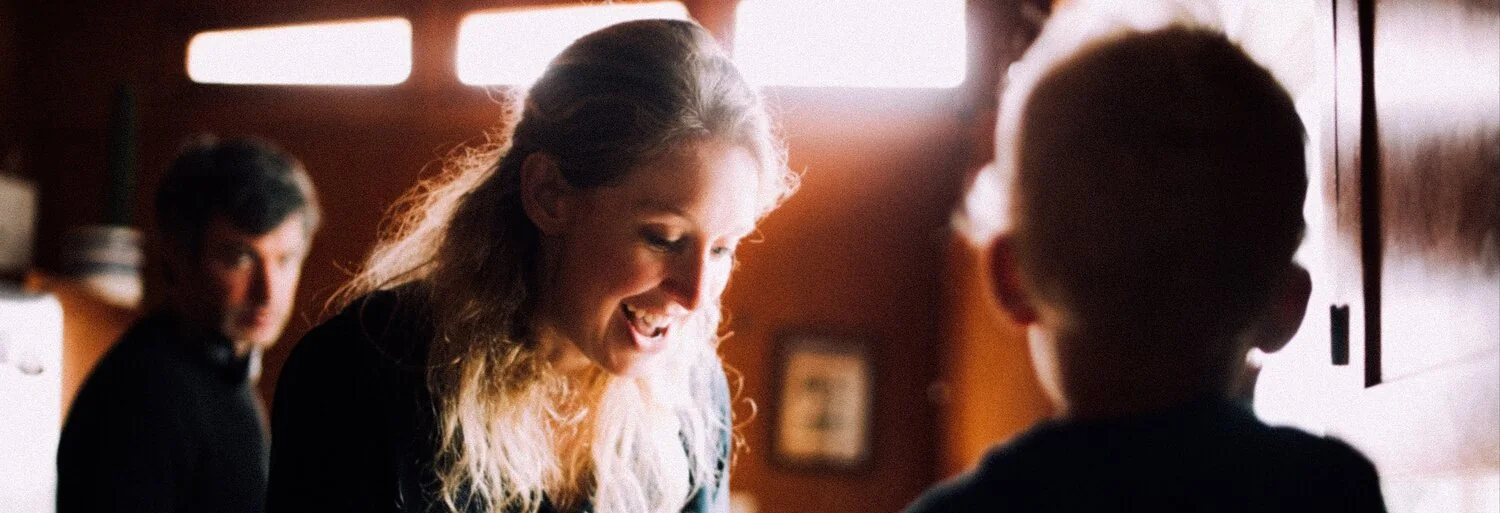
The first day of shooting was a failure, according to Lance Oppenheim. From then on they placed two cameras with 25 to 250 millimetre zooms at the far ends of the house, which let them go very tight on faces. About a week later they added a third camera with a 12 millimetre wide lens, operated by Oppenheim himself. They shot up to sixteen hours a day with a tiny crew. The only rule was not to record privileged calls with lawyers.
Oppenheim, known for the dreamlike look of his documentaries, gave up his anamorphic lenses and visual flourishes. The result, he says, is closer to "the oldest form of documentary filmmaking": pure observational cinema. - 8
A secret kept for three years
'You Can See Everything' was made in secret over three years, and only a few dozen people knew it existed. During the shoot, paparazzi circled the gated community in Del Mar and Nathan Fielder never left it, so as not to give the project away. Even some people at A24 were in the dark at first. WIRED's editor had to sign an NDA just to be told what Fielder's cover story would be about.
The secret nearly leaked in March 2025. The newsletter The InSneider reported that Fielder had visited Holmes several times at the prison camp in Bryan, Texas, prompting talk of a documentary. Nothing was confirmed until Telluride, a year and a half later. - 9
Two premieres in under 24 hours
Lance Oppenheim premiered 'Primetime', his first fiction feature, in Venice, with Robert Pattinson as 'To Catch a Predator' host Chris Hansen. Less than 24 hours later he was presenting 'You Can See Everything' at Telluride. Both are A24 films and he worked on them at the same time: after full days shooting 'Primetime', he would stay up late talking with Nathan Fielder and Billy Evans.
The two films opened in US cinemas three weeks apart. According to The Guardian, the documentary ended up outgrossing 'Primetime', even though that film had a movie star like Pattinson. - 10
The title comes from a text message
The title comes from a text Elizabeth Holmes sent Nathan Fielder while walking on the beach with Billy Evans and the children, shortly after inviting him to live with them: "fyi you can totally see everything." The directors simply dropped the "totally".
Nobody mentions the message again in the film, and its meaning is left open. Critics have read it as a joke about the crew's total access and as a clue to the word Fielder obsesses over: "can". - 11
The disputed shower scene
The scene of Billy Evans naked in the shower earned 'You Can See Everything' its R rating for graphic nudity in the US. According to Lance Oppenheim, it was Evans's own idea. "We were in the car ride on the way back from the gym and I said to Billy, 'We will give you some time to shower.' And Billy responded, 'Want to film me showering?' I offered to film him in a way that could avoid seeing his genitals, but Billy said he didn't care about being seen naked."
Evans denies it. In an "Ask Me Anything" thread on X he called it a "false narrative" and linked to a People story in which a source said he only agreed on the understanding that the scene would stay PG. - 12
Seyfried said yes without telling her agent
Nathan Fielder got Amanda Seyfried's number through Emma Stone. Seyfried, who won an Emmy for playing Holmes in 'The Dropout', thought they only wanted advice. "I was like, 'Oh, he just wants some advice,'" she recalled. She took part without telling her agent or her lawyer. When they found out, the lawyer said: "Well, now we have to retroactively set your deal in place because you need protection."
She had no approval over the edit whatsoever, and she admits she was scared. "There was always this vibration of risk and that sensation of: Am I going to destroy my career in some way?" she said. Even so, she has no regrets. - 13
A call nobody planned
During a visit by Amanda Seyfried to Billy Evans's home in Austin, Holmes called from prison just as the crew was filming. Seyfried and the directors insist it wasn't set up. "We didn't know she was gonna call right then. I am sitting there with her children and cuddling with her dog! While she's in prison!" the actress recalled. According to Variety, it was the first time the two had spoken: Seyfried hadn't consulted Holmes for 'The Dropout'.
The reenactments were later shot in the same Del Mar beach house, which had stood empty for two years. "Suddenly, it's like I've time-traveled two years into the past," Seyfried said. - 14
The prison, rebuilt from memory
Cameras, recorders and even pen and paper are banned from the visiting room at the federal prison camp in Bryan. So after each visit Nathan Fielder would call Lance Oppenheim and give him a "moment-by-moment play-by-play" while Oppenheim transcribed it. Those notes became the scripts that Amanda Seyfried later performed as Holmes. The visiting area had to be rebuilt essentially from memory.
Small doubts over a word or a delivery ended up driving the drama: on screen, Fielder keeps editing the script as he tries to recall exactly how Holmes said it. - 15
Evans hasn't seen it
On release day, Billy Evans admitted on the 'All-In' podcast that he hadn't seen the film and that Holmes "looks insane" in the trailer. "I might think this is the dumbest thing I have ever done," he added. The idea, he said, was for audiences to see Holmes and "make up your own mind".
Weeks later he spent hours taking questions on X. He blamed his constant sniffing in the film on Austin's allergies and on solo parenting two toddlers, and said of cocaine that he had "never been a fan". Asked if he regretted taking part, he replied: "Not at all." - 16
The profit share
One of the reenactments, with Amanda Seyfried and Christopher Abbott, reveals that at a meeting before the shoot, while Holmes was in another room, Billy Evans asked for a share of the profits. The directors reluctantly agreed, worried that paying the subjects would compromise the documentary's independence. An end card explains that Evans gave up the deal before release.
After the box office success, Page Six reported that Evans was sounding out Hollywood lawyers to claim part of the profits, supposedly to give them to charity. - 17
In space before Europe
On 4 November 2026, A24 posted an email with the subject line "NASA Request for Private Viewing" and the caption "Request granted": NASA had asked to screen 'You Can See Everything' on the International Space Station. Social media filled up with complaints from viewers in London, Australia and Mexico who still couldn't see it at home.
In Spain, Avalon had planned to release it on 12 February 2027 under the title 'Puedes verlo todo'. After pressure on social media, it moved the release up to 25 December 2026. - 18
Too much of a documentary for the DGA
The Directors Guild of America left 'You Can See Everything' out of its top feature award, because its rules expressly exclude documentaries. It can only compete in the documentary category. The Oscars have no such rule, and A24 has submitted it for Best Picture and Best Director, with Amanda Seyfried for Best Supporting Actress. No documentary has ever been nominated for Best Picture.
For now it swept the Critics Choice Documentary Awards on 8 November 2026. It won all five categories it was nominated in, including Best Documentary Feature and Best Director.