

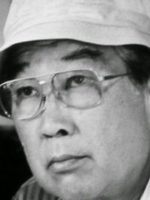
Tatsuya Nakadai
Japanese actor
- Also known as
- 仲代 達矢, Motohisa Nakadai
- Born
- 13 December 1932Meguro-ku, Tokyo
- Died
- 8 November 2025aged 92 · Tokyo, Tokyo
- Nationality
 Japan
- Height
- 1.78 m
- Star sign
- Sagittarius
- Years active
- 1954–2014
Known for
Biography
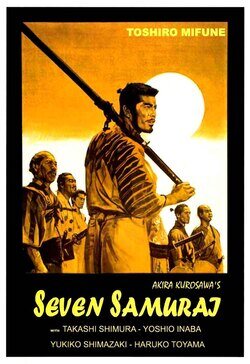
Tatsuya Nakadai's first film job lasted about four seconds. He crosses the back of a shot in Seven Samurai (1954) as a nameless samurai, says nothing and is gone. Thirty-one years later he was the old king at the centre of Akira Kurosawa's Ran.
He was born in the Meguro district of Tokyo on 13 December 1932 and registered as Motohisa. His father drove buses and died of tuberculosis when the boy was eight, after which his mother took a live-in job at a law office in Aoyama. Nakadai finished school in night classes and earned what he could selling tickets at a racecourse and working in a pachinko parlour. Someone he met at the racecourse paid his entrance fee for the Haiyuza theatre school, which he joined in 1952.
The director who gave him a career was Masaki Kobayashi, no relation to the Masahiro Kobayashi of his later films. Kobayashi put him in a prisoner-of-war drama shot in 1953 and shelved until 1956, then handed him his first real part in 1957, a neighbourhood thug in 'Kuroi kawa'. They made more than ten films together.
The Human Condition
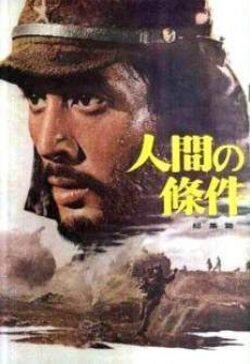
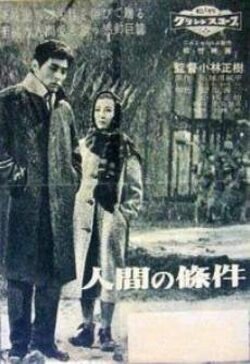
The Human Condition I: No greater love, The human condition: Road to eternity and The human condition: A soldier's prayer are one film in three pieces, nine hours and thirty-nine minutes of it, released between January 1959 and January 1961. Nakadai plays Kaji, a pacifist clerk posted to occupied Manchuria who ends up conscripted into the Japanese army and then held in a Soviet camp. He's in nearly every shot, and the trilogy made him a lead.
Harakiri, Yojimbo, Kwaidan
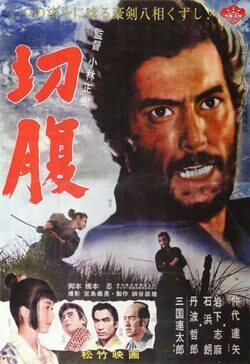
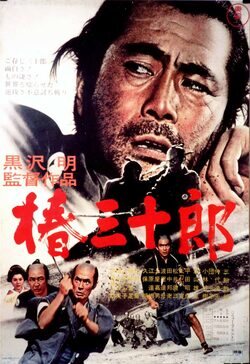
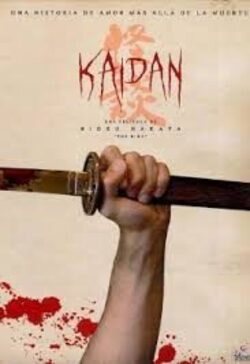
Harakiri (1962) was his own favourite of his films. He plays Hanshiro Tsugumo, a ruined ronin who asks a clan for permission to disembowel himself in their courtyard and then takes his hosts apart with talk, holding the swordplay back almost to the end. It won the Special Jury Prize at Cannes in 1963, and Kobayashi won the same prize two years later with Kwaidan, in which Nakadai is the woodcutter of the snow-woman story.
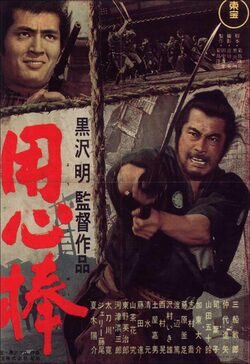
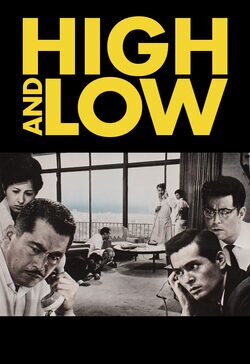
Kurosawa used him five times after the walk-on. In Yojimbo (1961) he's Unosuke, the young thug who carries a pistol through a world of swords and waves it about like a toy, and he came back for Sanjuro (1962). High and low (1963) put him on the other side of the law, as the detective chasing a kidnapper through the slums of Yokohama. Samurai rebellion (1967), for Kobayashi, ends in a duel with Toshiro Mifune.
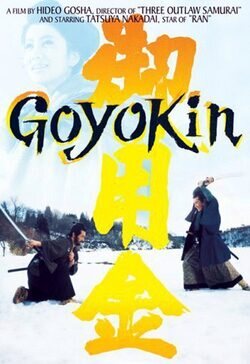
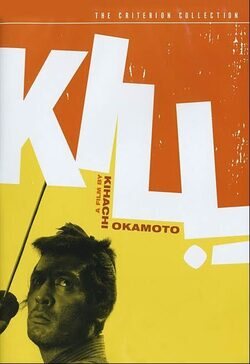
He never signed an exclusive contract with a studio, which was unusual in a system that kept its actors on the payroll, and he described himself as a freelance odd-job man. It let him work for anyone who asked. Kihachi Okamoto cast him as the hollow swordsman of Sword of Doom (1966) and used him again in Kill! (1968); Hideo Gosha gave him the samurai of Official Gold (1969).
Of those years he said his twenties felt like a long climb up Mount Fuji with a load on his back, and that the load was everybody else's masterpieces: the films of Kurosawa, Kobayashi, Kon Ichikawa and Mikio Naruse.
Kagemusha and Ran
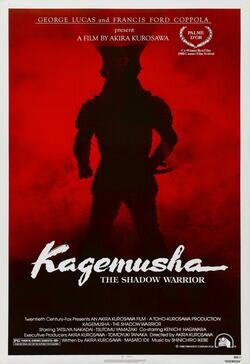
Kurosawa came back for him twenty years later. Shintaro Katsu had the lead in Kagemusha (1980) and left before the first day of filming was over, with nobody agreeing since on whether he quit or was fired, so Nakadai took the double role: the warlord Takeda Shingen and the petty thief made to impersonate him once he dies. The film shared the Palme d'Or with 'All That Jazz' and took two Oscar nominations.
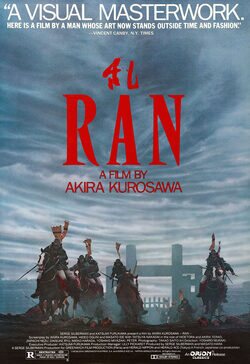
Ran followed in 1985. At 52, under heavy make-up, he played Hidetora Ichimonji, the warlord who divides his land between three sons and ends up wandering it with nothing, Kurosawa's King Lear.
It was the most expensive Japanese film made to that point: 1,400 suits of armour sewn over three years, 200 horses, and a castle built to be burned, which Nakadai walks out of in a single take. Emi Wada won the Oscar for the costumes, and Kurosawa took his only nomination as a director.
The school with no name
In 1975 he and his wife, Yasuko Miyazaki, started an acting school in their own house in Setagaya and called it Mumeijuku, roughly the school with no name. There were no fees. The course ran three years, the audition had a reputation for being impossible, and students weren't allowed to take other work while they trained. Koji Yakusho came out of it.
Miyazaki wrote under the pen name Ryu Tomoe, directed the company's productions and wrote for him on film and television. She died of pancreatic cancer on 27 June 1996, aged 65, and he never remarried. They had no children of their own; in 1978 they adopted her niece Nao, who became an actress herself.
Theatre took up at least half of his working life, from 'Hamlet' in 1964 through three separate productions of 'Richard III', plus 'Othello', 'Death of a Salesman' and 'Driving Miss Daisy'. He led three NHK historical serials, in 1972, 1996 and 2007. For Hiroshi Teshigahara he played a man who builds himself someone else's face in 'Tanin no kao' (1966), and with Naruse he worked five times, once opposite Hideko Takamine in 'Onna ga kaidan o agaru toki' (1960).
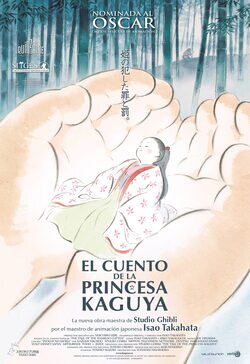
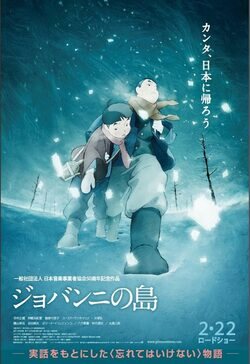
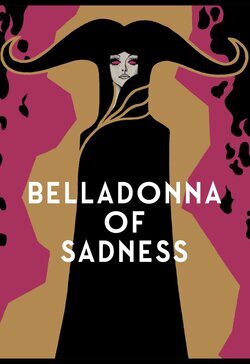
None of these was his biggest hit at home. In 'Hachiko monogatari' (1987) he's the professor whose akita went on waiting for him at Shibuya station for nine years after he died, and it was the top-grossing Japanese release of its year. Hollywood remade the story in 2009 with Richard Gere (Hachiko: A Dog's Story). He did voice work too: the devil in Belladonna of Sadness (1973), the old charcoal burner in Isao Takahata's The Tale of the Princess Kaguya (2013) and the elderly Junpei in Giovanni's Island (2014).
Mother Courage at 92
After he turned 70 he assumed the film offers would dry up. "I thought I wouldn't get any more film offers, so I decided to just act on the stage," he told a Tokyo press club in 2017, and said there were still thirty stage parts he wanted to play.
The films kept coming anyway. His last lead was 'Umibe no Ria' (2017), for Masahiro Kobayashi, as an ageing actor with dementia whose daughter puts him in a home, and his last was 'Toge: Saigo no samurai', released in June 2022 after two years of delay, in which he played the lord of Nagaoka opposite Yakusho, his own pupil.
His school had been holding its summer rehearsals since 1985 in Nakajima, a town on the Noto peninsula. In 1995 the town built a theatre there with a stage he designed himself, its back wall the only one in Japan that opens, and made him its honorary director. The earthquake of January 2024 damaged the building and postponed the Brecht production that became his farewell: Mother Courage, a woman's part, played until 22 June 2025, at 92.
He died of pneumonia in a Tokyo hospital on 8 November 2025, five months after that run ended. In September 2026 his pupils announced that Mumeijuku will close at the end of February 2027, fifty years on, saying they were following what he had left them. Seventy-one years separate the four-second walk-on from the last curtain.
Their career in figures
The earliest credit MovieNCo has for Tatsuya Nakadai is Seven Samurai (1954); in all, 18 films over 60 years. Their title most voted by MovieNCo readers is Seven Samurai (1954), with 17 votes. Their busiest decade is the 1960s, with 10 titles. The person they have worked with most is Akira Kurosawa, on 6 films, among them Seven Samurai and Ran.
Latest work
Full filmography (18)- 2013
- 2014
Giovanni's Island
Older Junpei Senou
- 1985
- 1980
Kagemusha
Shingen Takeda / Kagemusha
- 1973
Belladonna of Sadness
The Devil
- 1961
- 1969
Official Gold
Magobei Wakizaka
- 1968
Kill!
Genta
Where to watch Tatsuya Nakadai
Their films and TV shows you can watch now in the UK, and where.
- 1954
- 1985
- 1961
- 2013
- 1963
- 1962
- 1959
- 1964
Availability checked on 9 November 2026.
The best Tatsuya Nakadai films
By MovieNCo readers' ratings.
- Seven Samurai 1954
- The Tale of the Princess Kaguya 2013
- High and low 1963
- Yojimbo 1961
- Harakiri 1962
Has worked with
-
-
-

-

-

-

-

-

-

-


Questions about Tatsuya Nakadai
Where was Tatsuya Nakadai born?
Tatsuya Nakadai was born on 13 December 1932 in Meguro-ku, Tokyo.
When did Tatsuya Nakadai die?
Tatsuya Nakadai died on 8 November 2025, aged 92. They died in Tokyo, Tokyo.
How tall was Tatsuya Nakadai?
Tatsuya Nakadai was 1.78 m tall (5 ft 10 in).
What are the best Tatsuya Nakadai films?
By MovieNCo readers' ratings, the best Tatsuya Nakadai films are Seven Samurai (1954, 9.5), The Tale of the Princess Kaguya (2013, 9.4) and High and low (1963, 9.2).
How many films and TV shows was Tatsuya Nakadai in?
MovieNCo lists 18 films for Tatsuya Nakadai, from Seven Samurai (1954) to Giovanni's Island (2014).
What was Tatsuya Nakadai's star sign?
Tatsuya Nakadai was a Sagittarius: born on 13 December.
Page reviewed on 24 November 2026.