
Info
- Full Name: Verónica Forqué Vázquez-Vigo
- Date of birth: December 1, 1955
- Location: Madrid
- Country: Spain
- Died at: 66 years old (December 13, 2021)
Verónica Forqué died 4 years ago, on December 13, 2021. Their last recorded film was in 2026, and their first in 1972. They were active for 54 years, appearing in 24 films that averaged a rating of 6.0/10.

Biography
If you have ever watched 'The Shining' dubbed into Spanish, you have heard Verónica Forqué. She voiced Wendy in 1980, and she got the job because Stanley Kubrick supervised the foreign versions of his films himself and picked her, along with Joaquín Hinojosa for Jack Nicholson, because their voices matched the timbre of Shelley Duvall and Nicholson.
Spaniards have argued about that dub ever since. It is routinely called the worst in the country's history and just as routinely defended as exactly what Kubrick asked for. Forqué, asked about it in 2012, said she had enjoyed doing it and that the complaints did not bother her.
She was born in Madrid on 1 December 1955 into the film business. Her father, José María Forqué, directed more than fifty films and gives his name to the Spanish industry's Forqué Awards; her mother was the writer Carmen Vázquez-Vigo; her older brother Álvaro also became a director. She started as a teenager in 'My Dearest Senorita' (1972).
Almodóvar's neighbour
Her breakthrough came with Pedro Almodóvar. In 'What Have I Done to Deserve This?' (1984) she is Cristal, the cheerful sex worker who lives next door to Carmen Maura's exhausted housewife in a Madrid tower block. She worked with him again on 'Matador' (1986).
The third time she carried the picture. 'Kika' (1993) casts her as a make up artist too kind to think badly of anyone, dropped into a very dark story alongside Victoria Abril, Peter Coyote and Rossy de Palma. It is the performance most people outside Spain know her for.
Four Goyas, and a night nobody had managed before
Spain's national film awards had barely started when she began collecting them. The first came at the very first ceremony, for supporting actress in Fernando Trueba's 'El año de las luces' (1986), as the nurse a teenage Jorge Sanz falls for in a postwar boarding school.
At the following ceremony, in 1988, she won two in the same evening, best actress for Fernando Colomo's 'La vida alegre' and supporting actress for Luis García Berlanga's 'Moros y cristianos'. No Spanish performer had done that before. 'Kika' brought a fourth in 1994, tying Carmen Maura's record.
In between she made 'Bajarse al moro' (1989) with Colomo, Antonio Banderas and Juan Echanove, a comedy about a houseful of young Madrileños smuggling hashish that is still quoted in Spain. On stage she originated Carmela in José Sanchis Sinisterra's '¡Ay, Carmela!' in 1986.
Television and the long middle
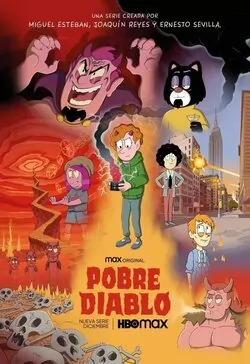
She was a fixture on Spanish television for thirty years. She led the TVE comedy 'Pepa y Pepe' in 1995, appeared in the thriller 'Desaparecida', and later joined the long running sitcom 'La que se avecina'.
The films kept coming too: 'Reinas' (2005), a screen version of the play 'Toc Toc' (2017) and the comedy 'Salir del ropero' (2019). She directed in the theatre as well, and never really stopped working.
She married the director Manuel Iborra in 1981, made several films with him, and separated from him in 2014. They had a daughter, María.
The last years
Forqué spoke publicly about the depression she had lived with for years, which few actors of her generation did. In 2021 she joined the Spanish celebrity edition of MasterChef and left part way through, telling viewers on air that she was not well.
She died at her home in Madrid on 13 December 2021, aged 66. She took her own life. Tributes came from more or less everyone who had worked with her across four decades.
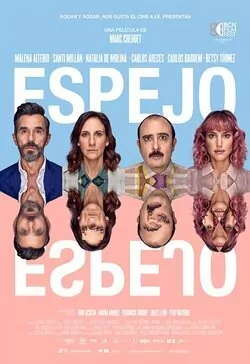
Her last film, 'Espejo, espejo', a comedy by Marc Crehuet in which she has a small part, reached cinemas five months later.
In May 2026 her daughter María published 'No soy Verónica Forqué' with the playwright Antonio Álamo, built from diaries the actress had kept since she was a teenager. It deals with her vocation and her family, and also with mental illness, addiction and press intrusion. Iborra released a documentary series about her around the same time.
What remains is an actress Spanish audiences felt oddly close to, partly because of that high, hurried voice and the sense that she meant no harm to anybody. Four Goyas make the case on paper. Anyone who saw her in 'Bajarse al moro' or 'Kika' had worked it out already.
awards
- Feroz Awards: 1 1
- Goya Awards: 1 1
Last appearances: movies and tv shows


- Highest-rated movie: Why Do They Call It Love When They Mean Sex? (1993) 9.3
- Lowest-rated movie: Moors and Christians (1987) 0.1
- Highest-rated tv show: La que se avecina (2007) 7.7
- Lowest-rated tv show: Pepa y Pepe (1995) 5.5
Videos

Rehearsals 'Tenemos que hablar'
February 16 2016