
Info
- Full Name: Manoj Night Shyamalan
- Date of birth: August 6, 1970 (56 years old)
- Location: Mahé, Pondicherry
- Country: India
M. Night Shyamalan has been active for 28 years, participating in 18 movies that average a 6.6/10 score.



Biography
There are perhaps half a dozen directors alive whose name goes above the title on a poster, and M. Night Shyamalan is one of them. His films have taken more than 3.3 billion dollars worldwide across three decades, and audiences walk into them waiting for the thing at the end. He has spent twenty-five years playing with that expectation, sometimes brilliantly and sometimes catastrophically.
The catastrophes are part of the story. Few major careers have collapsed and rebuilt themselves quite so publicly.
He is also, unusually for a director of his standing, a genuinely regional filmmaker. Almost everything he has shot in thirty years has been made within driving distance of the Philadelphia house he grew up near, with local crews he uses repeatedly, which is why his suburbs look more specific than most American suburbs on screen.
From Mahé to Pennsylvania
He was born on 6 August 1970 in Mahé, India, as Manoj Nelliyattu Shyamalan. His father is a neurologist and his mother a gynaecologist, and the family emigrated to the United States when he was six weeks old. He grew up in Penn Valley, outside Philadelphia, in a house where medicine was the expected career.
He added the "Night" as a teenager, after reading about the Lakota. He studied film at New York University's Tisch School of the Arts and graduated in 1992.
He was still a student when he made his first feature, 'Praying with Anger', a semi-autobiographical story about an Indian-American student returning to India. 'Wide Awake' (1998) barely got released. In between he took a paying job that turned out rather well: he co-wrote 'Stuart Little' (1999).
The Sixth Sense
Then, the same year, 'The Sixth Sense' arrived and the industry stopped to look. A boy who sees dead people, a psychologist trying to help him, and an ending that sent millions of people straight back to the beginning.
It took more than 670 million dollars, collected six Oscar nominations and got him two of them, for directing and original screenplay, at twenty-nine. Haley Joel Osment, Bruce Willis and Toni Collette all came out of it changed.
It was the second biggest film in the world that year, behind only the first Star Wars prequel, and it briefly changed how thrillers were sold: studios started asking press and audiences not to give away endings.
He followed it with 'Unbreakable' (2000), a superhero film made before superhero films worked the way they do now, with Willis and Samuel L. Jackson, and 'Signs' (2002), in which Mel Gibson and Joaquin Phoenix face an alien invasion from a Pennsylvania farmhouse. Another 400 million.
Those three films set a method he has never really abandoned: broken families, a camera that stays still, long silences, a turn at the end and a score by James Newton Howard, who wrote the music for almost everything he made for fifteen years. And Pennsylvania, always.
Newsweek put him on the cover as "the next Spielberg". It took him more than a decade to recover from the compliment.
Ten years downhill
The fall was long and extremely public. It began with 'The Village' (2004), which made money and split the critics, and accelerated with 'Lady in the Water' (2006), the bedtime story about a nymph in an apartment block swimming pool, which he took away from Disney and over to Warner Bros after its executives told him they didn't understand it.
In that film he gave himself the role of a writer whose book is going to change the world, and he was beaten up for it for years.
Next came 'The Happening' (2008), in which the plants decide to finish off humanity, and 'The Last Airbender' (2010), the animation adaptation that collected Razzies and which his own admirers still hold against him.
From the same period comes 'Devil' (2010), which he wrote and produced without directing. It was meant to be the first in a run of small genre films built from his ideas and handed to other directors, and it stayed a run of one.
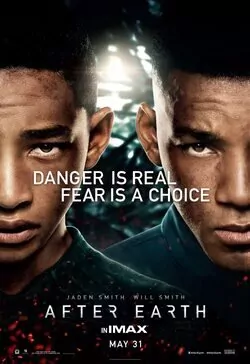
He closed the stretch with 'After Earth' (2013), a commission for Will Smith and his son Jaden Smith on which his name eventually vanished from the marketing. Hollywood had decided he was finished.
Some of that work has been reassessed since. 'Unbreakable' is now taught as one of the first films to take comic-book logic seriously, and 'The Village' has defenders it certainly didn't have in 2004. 'The Last Airbender' does not.
How to rebuild a career
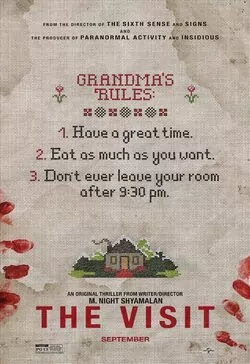
His solution was to make himself cheap. He put around five million dollars of his own money into 'The Visit' (2015), a home-made horror film about two children spending a week with their very odd grandparents. It took nearly a hundred.
He has worked the same way ever since: low budgets, his own scripts, shot in and around Philadelphia, with total control and his own money frequently on the line.
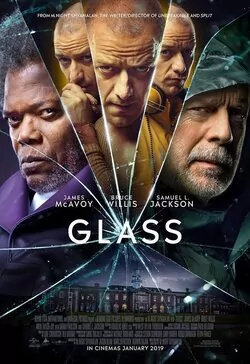
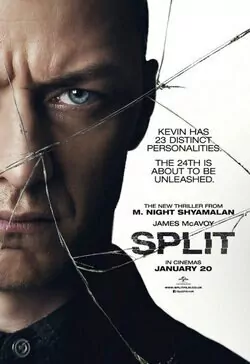
That produced 'Split' (2016), with James McAvoy let loose as a man with two dozen personalities and a young Anya Taylor-Joy opposite him. Its final scene revealed, to the surprise of everyone including the cast, that he had secretly shot a sequel to 'Unbreakable' sixteen years later. He closed the accidental trilogy with 'Glass' (2019).
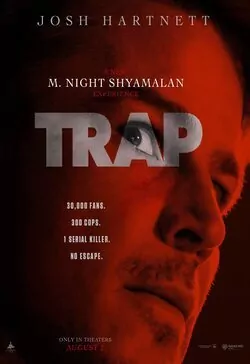
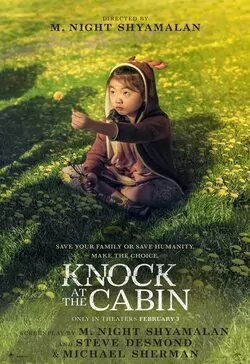
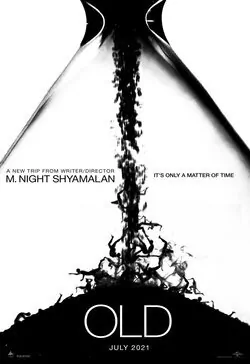
Since then have come 'Old' (2021), about a beach that ages anyone who stays on it, 'Knock at the Cabin' (2023), with Dave Bautista announcing the apocalypse at a holiday cabin, and 'Trap' (2024), in which Josh Hartnett is a serial killer stuck at a pop concert.
He has produced and directed television too. He was behind 'Wayward Pines' (2015-2016) and, more substantially, 'Servant' (2019-2023), four seasons for Apple TV+ starring Rupert Grint and Lauren Ambrose, shot almost entirely inside one Philadelphia house.
His relationship with critics has been anything but steady. He has gone from heir apparent to easy punchline and back again, occasionally over the same film. What the filmography shows is that since 2015 everything he has made has been his own: his script, a budget he can control, and no other studio's franchise attached to it.
The trade-off is that the twist has become a brand. Audiences arrive braced for it, which makes the films harder to pull off than they were in 1999 and is presumably part of why he keeps trying.
A family business
He married Bhavna Vaswani, whom he met at NYU, in 1992, and they have three daughters. His company, Blinding Edge Pictures, runs out of Pennsylvania, and since 2023 he has had a multi-year deal with Warner Bros.
Two of the daughters have gone into the trade. Saleka is a singer and songwriter: she wrote the songs for 'Trap' and played the pop star the whole film revolves around.
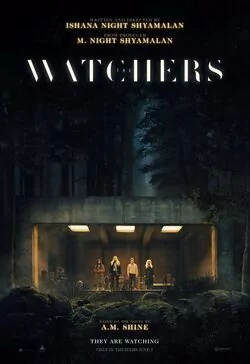
Ishana worked on 'Servant' and 'Old' before making her directing debut in 2024 with 'The Watched', released under that title in Britain and as 'The Watchers' in America, an adaptation of the A. M. Shine novel with Dakota Fanning. Her father produced it, and the two films came out in the same summer.
The third sister is Shivani. He tends to explain the family operation as something that happened by itself: the girls grew up around film sets, took internships on his crews, and two careers came out of it.
India gave him the Padma Shri in 2008 and he chaired the jury at the Berlin Film Festival in 2022. He still lives in Pennsylvania, where he has been steadily buying up land, and he still gives himself a cameo in nearly everything he directs.
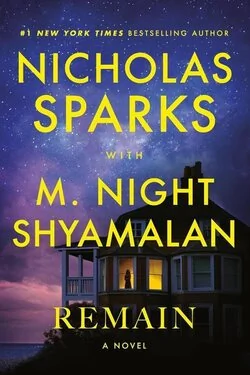
What comes next is his strangest project in years. 'Remain' is a supernatural romance he developed alongside the novelist Nicholas Sparks, each of them writing it in their own medium, the film for him and the book for Sparks. Jake Gyllenhaal plays an architect who retreats to a town on Cape Cod, with Phoebe Dynevor and Ashley Walters.
It is the first time he has built a story in parallel with a novelist, and the first romance on a filmography otherwise made of ghosts, aliens and men in cabins.
Warner Bros moved it from October 2026 to 5 February 2027, and the first teaser went out this September. Reports say it has tested better than anything he has made. With him, that could mean almost anything at all, and it usually has.
Family and relationships
- Children: Ishana Shyamalan
awards
- Razzie Awards: 1 0
- Academy Awards (Oscars): 1 0
Last appearances: movies and tv shows
- Highest-rated movie: Unbreakable (2000) 8.1
- Lowest-rated movie: The Last Airbender (2010) 4.2


